

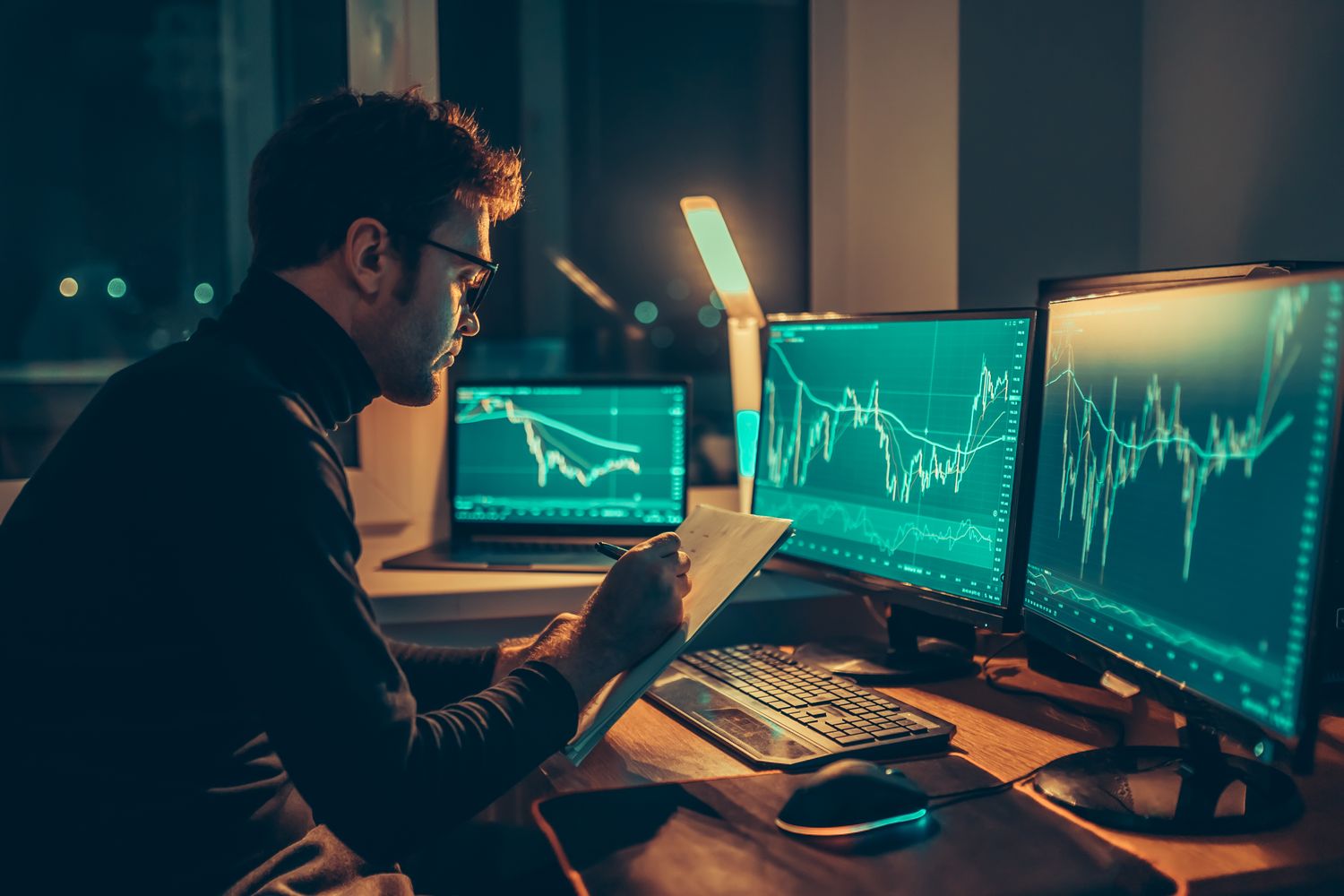
The Role of Leverage in Trading: Navigating Power and Risk
In the high-stakes environment of financial markets, leverage serves as one of the most potent tools available to traders. At its core, leverage is the practice of using borrowed capital to increase the potential return on an investment. While it can act as a force multiplier for a trader’s portfolio, it carries a reciprocal increase in risk. Understanding how to deploy leverage effectively is not merely a mathematical exercise; it is a fundamental pillar of risk management and strategic market participation.
Defining Financial Leverage in Modern Markets
Leverage functions by allowing a trader to control a larger position than their available account balance would otherwise permit. If a broker offers a leverage ratio of 10:1, for example, a trader with 1,000 dollars can control a position worth 10,000 dollars. The primary appeal of this mechanism is the magnification of profits. If the underlying asset moves in the desired direction, the gains are calculated based on the full value of the 10,000-dollar position, rather than the initial 1,000-dollar investment.
However, the inverse is equally true. Losses are also calculated based on the total position size. If the market moves against the trader, the losses can quickly exceed the initial capital committed. This is why leverage is often described as a double-edged sword. It does not change the probability of a market move, but it drastically alters the impact of that move on the trader’s equity.
The Mechanics of Margin and Maintenance
To utilize leverage, traders must provide collateral, which is commonly referred to as margin. Margin is the portion of the trade value that the trader must put up themselves. The broker covers the remainder of the position, essentially providing a short-term loan for the duration of the trade.
Two critical concepts govern this relationship:
-
Initial Margin: This is the minimum amount of capital required to open a leveraged position. It acts as the “good faith” deposit ensuring the trader can cover potential losses.
-
Maintenance Margin: This is the minimum equity level that must be kept in the account while the position is open. If the account value falls below this threshold due to unfavorable market movements, a margin call is triggered.
A margin call requires the trader to either deposit more funds into the account immediately or close the position to limit further losses. If the trader cannot meet the margin call, the broker has the right to liquidate the position at the current market price, often at a significant loss to the trader.
Why Traders Opt for Leverage
Despite the inherent risks, leverage is a staple in professional and retail trading for several valid reasons. It allows traders to diversify their portfolios even with limited capital. Without leverage, a trader might only be able to afford a single asset class or a few shares of a company. With leverage, they can spread their risk across multiple trades, hedging against volatility in specific sectors.
Furthermore, leverage is essential for short-term trading strategies such as day trading or scalping. In these environments, price fluctuations may be minimal on an absolute basis. Leverage allows a trader to capture meaningful gains from these small price changes that would otherwise be insignificant if traded with un-leveraged capital.
The Psychological Burden of Leveraged Positions
One aspect often overlooked in trading literature is the psychological impact of using leverage. When a trade is heavily leveraged, the emotional threshold for volatility narrows significantly. A minor market correction that might be viewed as a normal fluctuation by an un-leveraged investor can become a catastrophic event for a highly leveraged trader.
This pressure often leads to poor decision-making. Traders may panic and close positions prematurely, or conversely, stay in losing trades for too long in the hope of a reversal—a behavior known as the sunk cost fallacy. Successful traders recognize that leverage requires an even more disciplined emotional state. They must strictly adhere to their pre-defined exit points and stop-loss orders regardless of the volatility in their account balance.
Strategic Risk Management Strategies
To incorporate leverage safely, traders must implement robust risk management protocols. These are not optional safeguards; they are the primary defense against total account depletion.
-
Stop-Loss Orders: Every leveraged trade should be paired with an automatic stop-loss order. This ensures that the exit point is determined before the trade is executed, removing the emotional impulse to hold onto a losing position.
-
Position Sizing: Never commit the entire account balance to a single leveraged trade. Proper position sizing involves calculating the potential loss as a percentage of the total account, ensuring that even a series of losses will not bankrupt the trader.
-
Volatility Awareness: High-leverage trades are more dangerous in volatile markets. Traders should adjust their leverage ratios downward during times of economic uncertainty or before major news announcements, where sudden price gaps can bypass stop-loss orders.
-
Understand the Cost: Leveraging is not free. Most brokers charge interest, often referred to as a rollover or swap fee, for holding leveraged positions overnight. These costs can erode profits over time and must be factored into the overall strategy.
Evaluating Brokerage Terms
Not all leverage is created equal. Different brokers and different asset classes offer varying leverage ratios. For instance, the forex market typically offers much higher leverage than the stock market. Before choosing a trading platform, it is imperative to read the fine print regarding margin requirements, interest rates, and liquidation policies.
A trader must also be aware of the “stop-out” level. While a margin call is a warning, a stop-out is the point at which the broker automatically closes the position to prevent the account from going into a negative balance. Understanding these specific mechanics can be the difference between surviving a temporary market dip and having your account liquidated.
Conclusion
Leverage is a sophisticated tool that can elevate a trader’s performance, but it demands respect and careful handling. It is not a substitute for market knowledge or a shortcut to wealth. Rather, it is a mechanism that requires a higher level of precision, discipline, and emotional control. By mastering the mathematical relationship between margin and position size, and by prioritizing strict risk management, traders can harness the power of leverage while shielding themselves from its most destructive potential.
FAQ
Can I trade without any leverage?
Yes, trading without leverage is essentially cash-based investing. You only trade with the funds currently available in your account. While this eliminates the risk of margin calls and interest fees, it also limits your ability to scale positions quickly and requires a larger initial capital outlay to achieve the same potential returns.
How does leverage differ from margin?
Leverage is the outcome or the act of controlling a large asset with a small amount of money. Margin is the tool used to achieve that leverage; it is the deposit required by the broker to hold the position. You use margin to gain leverage.
Are there specific assets where leverage is more dangerous?
Yes, assets with high historical volatility, such as certain cryptocurrencies or penny stocks, are significantly more dangerous when leveraged. The speed at which these assets move can trigger liquidations faster than a trader can manually intervene, even with stop-loss orders in place.
What is the difference between a margin call and a forced liquidation?
A margin call is a notification from your broker that your account equity has dropped below the required maintenance level, requesting additional funds. A forced liquidation occurs if you fail to provide those funds or if the market moves so fast that your account balance reaches the broker’s minimum liquidation threshold.
Does using high leverage mean I am a bad trader?
Not necessarily, but it is often associated with amateur behavior. Professional traders generally use leverage sparingly and strategically. The tendency to use the maximum available leverage is typically a sign of undercapitalization or poor risk management.
Why do brokers offer such high levels of leverage?
Brokers offer high leverage primarily to attract more trading volume, as they earn commissions or spreads on every trade executed. While it is a marketing tool for them, it places the entire burden of risk management on the trader.
Can a margin call impact my credit score?
In standard brokerage accounts, margin is secured by the assets in your account, not by your personal credit. Therefore, a margin call typically does not affect your credit score. However, you are responsible for any negative balance that may occur if the broker fails to liquidate your position before the equity is exhausted.

